
Luora is submitted 🎉
Today we sent Luora in. Here is where it stands, in plain words.
The problem we're working on
Smart contract security is getting louder, not better. $3.4B was stolen from crypto in 2025 (Chainalysis), while bug bounties drown in AI-written reports that sound sure and turn out wrong. curl shut its bounty when fewer than 1 in 20 reports were real, and Immunefi bans hunters for AI-generated reports. Meanwhile the tool most auditors use, Foundry, prints its traces as walls of text.
Our answer is one rule: AI explains. You judge.
What's done
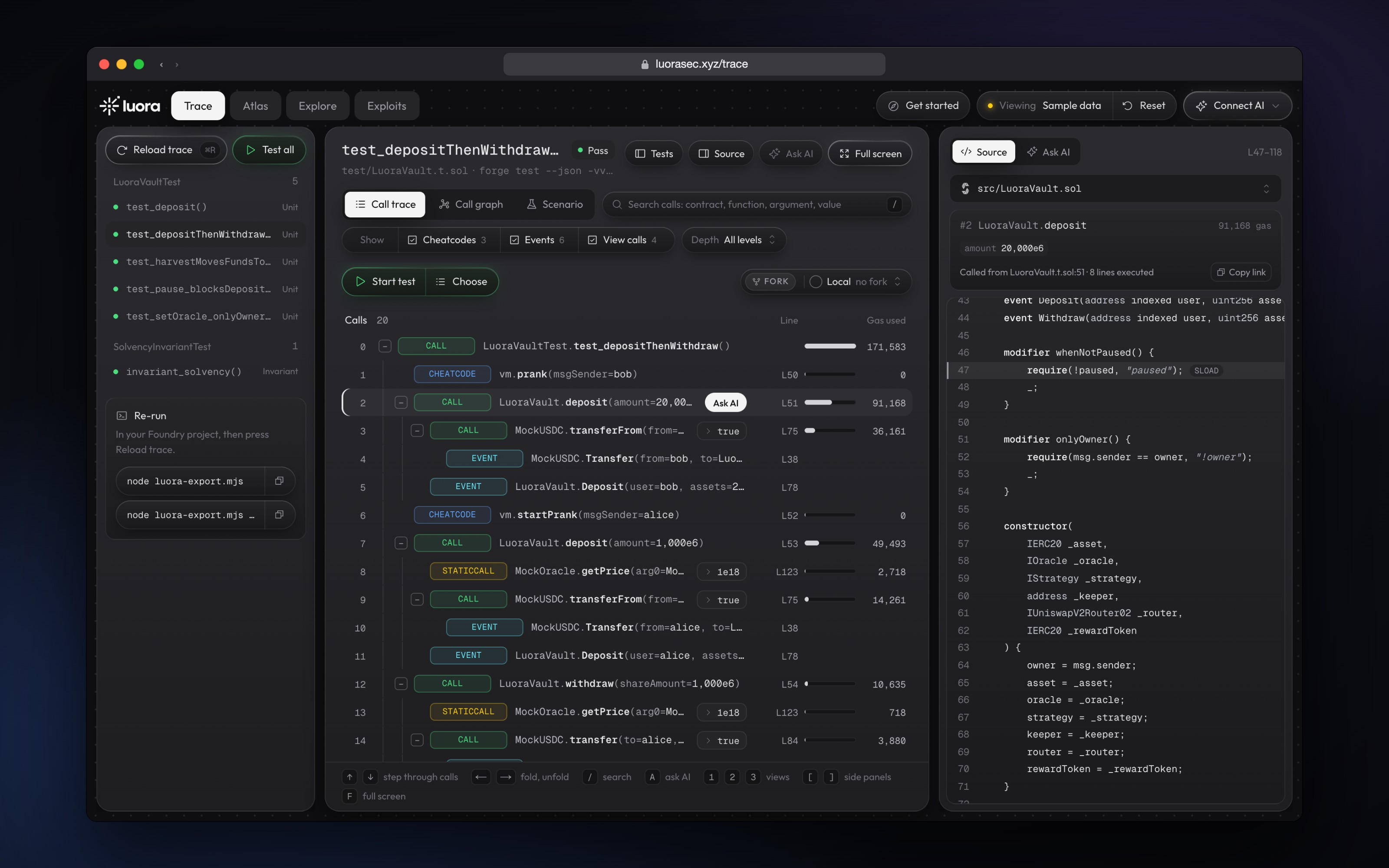
• Trace: run your Foundry tests and follow every call, step by step, beside the exact line of code it ran. Click a test to see why it passed.
• Call graph: the same run as a map of who called whom.
• Start test from the app: all tests, one test, or a few, with a live pass/fail log.
• Testnet forks: run the same tests on a copy of Ethereum Sepolia, Arbitrum Sepolia, Base Sepolia, Robinhood Chain Testnet, HyperEVM Testnet and Tempo Moderato. Read-only: no wallet, no keys, no gas, nothing sent.
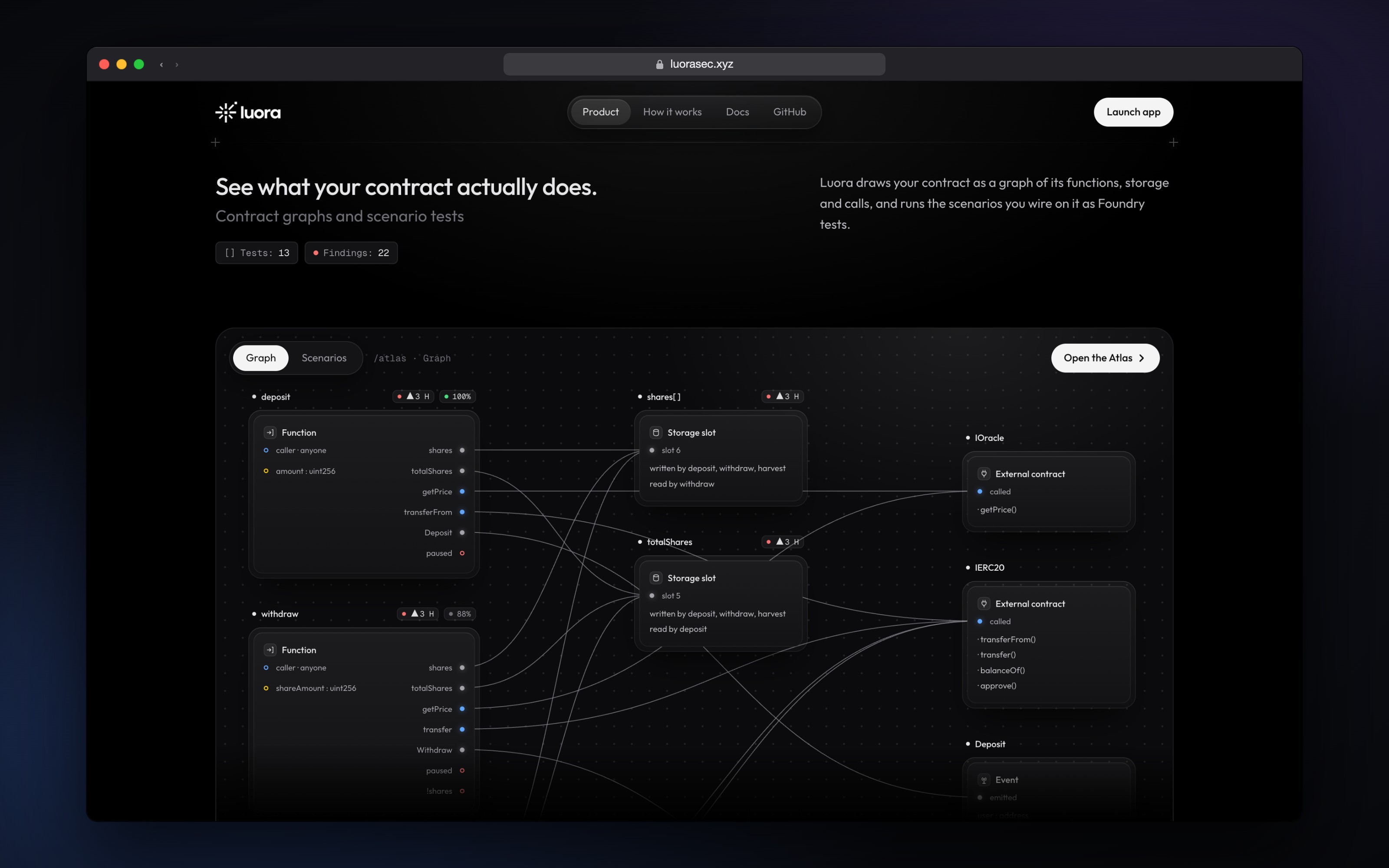
• Atlas: the contract as a map, built from the compiler's AST. Every function, who can call it, what it changes, with Slither, Aderyn and forge coverage pinned where they belong.
• Paths: replay each entry point step by step; a write that lands after an external call is flagged.
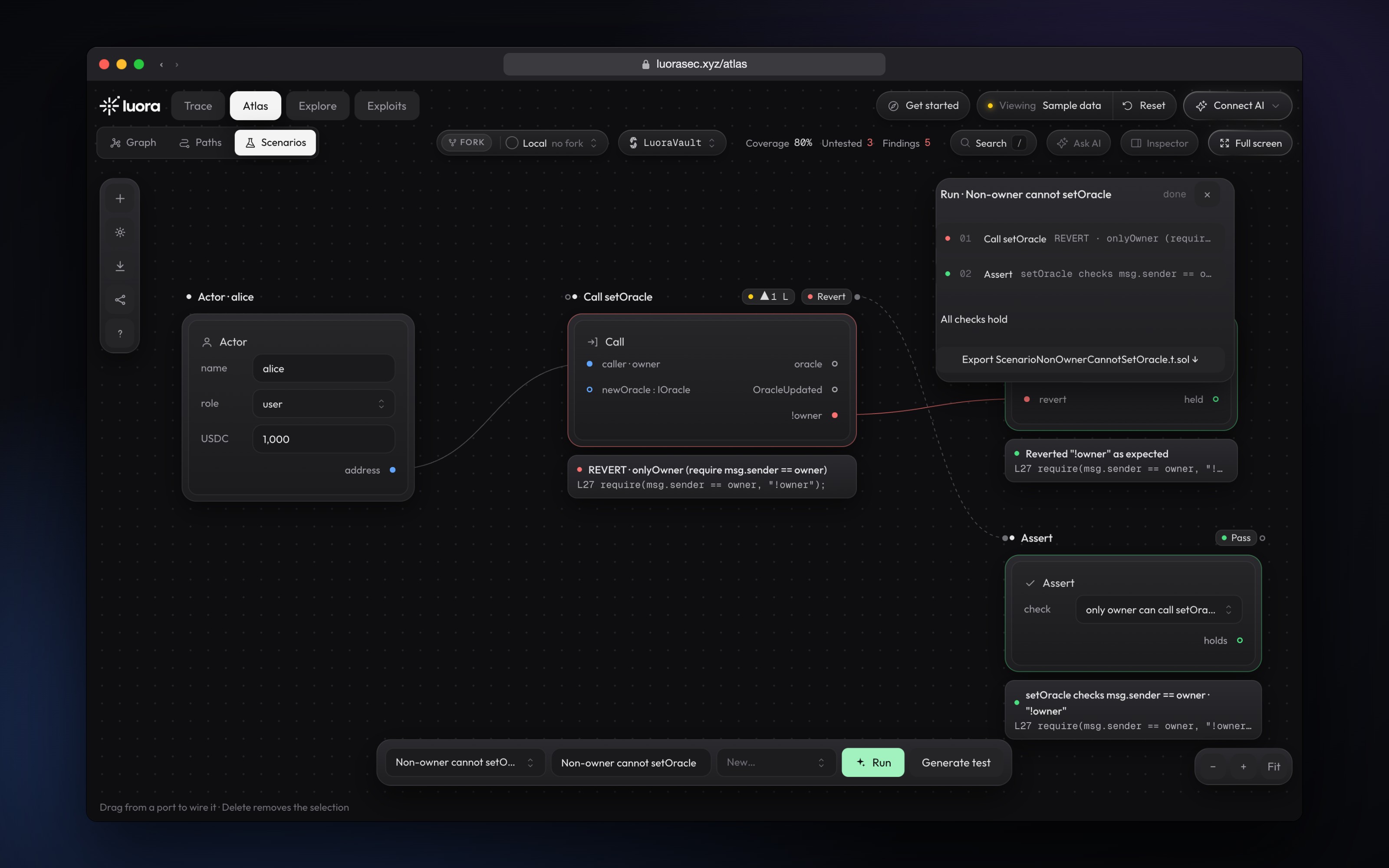
• Scenarios: build a test by wiring cards (who calls, what they call, the revert you expect, the rule that must hold), run it in the browser, then export a real Foundry test.
• Explore: Uniswap v3, Aave v3.5, Morpho Blue and Compound III, every flow as a sequence diagram tied to the source.
• Exploits: Poly Network, Euler, Nomad and Beanstalk as post-mortems: the attack path, the missing check, the invariant that would have caught it. No exploit code.
• Ask AI: explains one call or one function at a time, with your own AI (your Claude Code, a local model, or your own key). It never gives a verdict.
• MCP server: your AI client can read a run and propose test scenarios, and only scenarios that test intended behaviour are accepted.
How it's built
Plain Node exporter scripts with no dependencies, a Next.js 16 app, Foundry underneath, and CI that lints, type-checks, builds, runs forge tests and smoke-tests the exporter. Everything runs on your own machine next to your Foundry project, so your code is never uploaded.
Try it
• luorasec.xyz → Launch app → Try the sample vault. No login, no wallet.
• Source: github.com/0xpochita/luora
• Demo and pitch videos are in the submission.
Follow us on X!
https://x.com/luorasec
What's next
1. Hosted workspaces, so an audit team can open the same run together.
2. A GitHub check that posts the trace on every pull request.
3. More protocols in Explore and more post-mortems in Exploits.
If you audit, hunt bugs or ship Solidity, I'd love to hear what slows you down when you read a trace. Replies and DMs are open. Thanks for reading!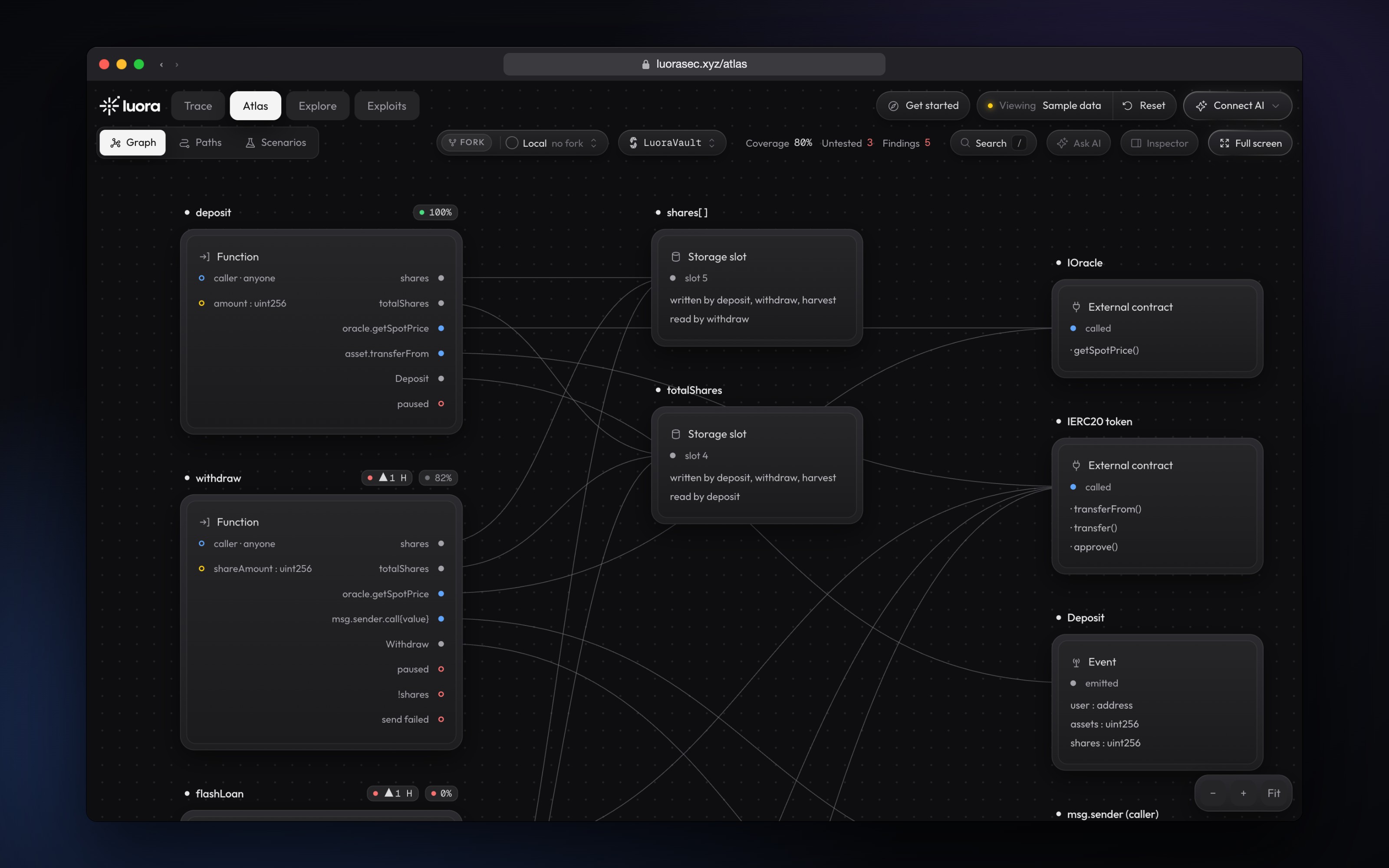
Give feedback to the team
Your message is private to you and the Luora team.
Create an account to send feedbackAfter signup, you can write a private message with this update attached.